
Yes, you can use an AI voice to call caregiver applicants, as long as the applicant gave prior express consent to be called at that number. The call must also identify your agency, and you have to stop calling when they ask. The federal Telephone Consumer Protection Act (TCPA) treats an AI-generated voice the same as a prerecorded message. Recruiting calls are covered even though they are not sales calls.
That matters because speed wins applicants. An AI agent can call a new applicant within minutes, day or night, which is hard for a busy office to match. The legal work happens earlier, on your application form, where consent is captured or missed.
This FAQ covers four groups of questions: whether the TCPA applies at all, what consent you need, how to run the calls, and what the risk looks like. It is written for owners and office managers of non-medical home care agencies.
General information, not legal advice. TCPA rules change and state laws differ. Review your consent language and calling setup with your own attorney.
Last updated: July 8, 2026. We review this page when the FCC or a federal appeals court changes the rules.
Key Takeaways
- The FCC ruled in February 2024 that AI-generated voices count as an "artificial or prerecorded voice." AI calls need the called party's prior express consent.
- The Ninth Circuit held in 2021 that job recruiting robocalls to cell phones are covered by the TCPA, even though they are not telemarketing.
- Recruiting calls that do not sell anything generally need prior express consent, which can be oral or written. Written, specific consent on the application form is far easier to prove.
- Applicants can revoke consent in any reasonable way, and you must honor it within 10 business days. A "stop calling" on the call should end the calls.
- Statutory damages are $500 per call, up to $1,500 if willful, and TCPA suits hit 2,810 filings in 2025, per WebRecon.
Does the TCPA Apply to Your Recruiting Calls?
The Telephone Consumer Protection Act (TCPA) is the 1991 federal law that limits autodialed and artificial-voice calls. It is codified at 47 U.S.C. 227, and the FCC writes its rules.
Does the TCPA cover recruiting calls, or only sales calls?
The TCPA covers recruiting calls. In Loyhayem v. Fraser Financial and Insurance Services, the Ninth Circuit reversed a dismissal on August 10, 2021. The court held that the statute covers "any call," regardless of content. That includes calls to a cell phone made with an autodialer or an artificial voice without consent (Ninth Circuit opinion, No. 20-56014).
The call in that case was a prerecorded job recruitment message. The district court had thrown the case out because the call was not telemarketing. The appeals court said that was the wrong reading of both the statute and the FCC's rule (Loyhayem opinion).
Does an AI voice count as a "robocall"?
Yes. The FCC released Declaratory Ruling FCC 24-17 on February 8, 2024. It confirmed that the TCPA's limits on "artificial or prerecorded voice" cover "current AI technologies that generate human voices" (FCC 24-17). Callers using that technology need prior express consent, absent an emergency or an exemption.
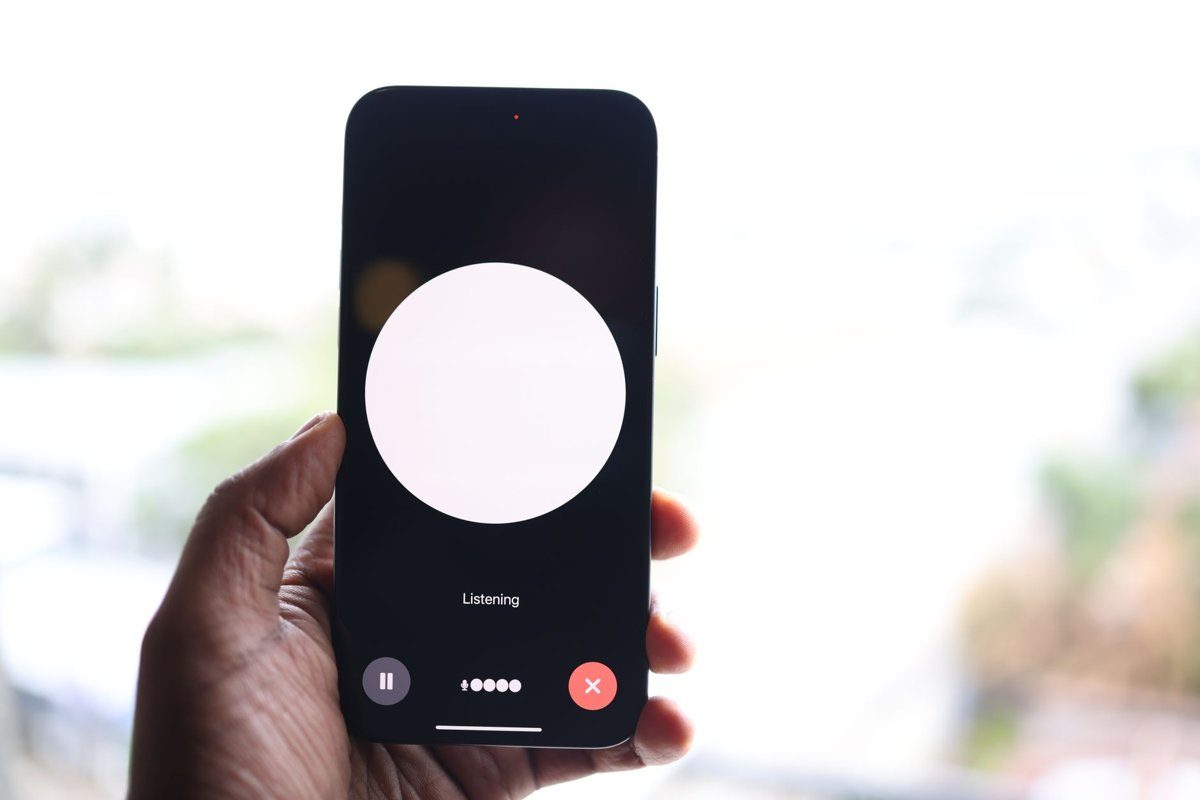 To the FCC, a voice generated by AI is an artificial voice, however natural it sounds. Photo: Solen Feyissa / Pexels
Does it help if the AI sounds human or a person is monitoring the call?
No. The FCC said the TCPA "does not allow for any carve out of technologies that purport to provide the equivalent of a live agent" (FCC 24-17, para. 6). The ruling also cites an earlier FCC decision about live agents who pick which recorded clips to play. Their presence does not change the fact that an artificial voice started the call. Plan your consent process as if every AI call is a robocall, because legally it is.
What Consent Do You Need?
What kind of consent do AI recruiting calls need?
Most recruiting calls need prior express consent, which can be oral or written. The stricter prior express written consent applies only when a call includes an advertisement or counts as telemarketing (47 CFR 64.1200). The Ninth Circuit applied exactly that split in Loyhayem.
| Prior express consent | Prior express written consent | |
|---|---|---|
| Needed for | Informational calls, including pure recruiting calls | Calls that advertise or telemarket |
| Form | Oral or written | Signed written agreement (e-signature allowed) |
| Required disclosures | None prescribed | Must say it authorizes automated or artificial-voice telemarketing calls, and that agreeing is not a condition of purchase |
| Home care example | "Your application came in, can we set up an interview?" | A call that pitches a paid training course or a product |
Keep recruiting calls about the job. If your script starts selling something, you may drift into the written-consent category.
Is a phone number on a job application enough consent?
Often it is, but only for calls about that application. The FCC has long said that people who "knowingly release their phone numbers" have given permission to be called. That permission covers "the number which they have given, absent instructions to the contrary" (FCC 15-72, para. 49).
The catch is proof. The same FCC order says that if consent is questioned, "the burden is on the caller to prove" it. A bare phone field on a form is a weak record. Littler, a large employment law firm, advised employers after Loyhayem to get written consent when they collect cell numbers. It also advised vetting vendors that call for them (Littler, August 13, 2021).
How do you capture consent on your application form?
Add a short, separate consent statement next to the phone field. It should name automated and AI-voice calls and cover vendors calling for you. Save a record of each submission. The FCC does not require any specific method (FCC 15-72, para. 49), but a clear written record is what you will want if a call is ever challenged.
 Consent is captured on the application, before any call is made. Photo: Kampus Production / Pexels
Example consent language. This is a starting point to review with your attorney, not approved legal text.
By checking this box, I agree that [Agency Legal Name] and companies calling on its behalf may call and text me at the number above. These calls will be about my job application and caregiver openings. These calls may use automated technology or an artificial or AI-generated voice. Agreeing is not required to apply. I can opt out at any time by saying "stop" on a call, replying STOP to a text, or calling [phone number].
Record keeping that makes this consent provable:
- The exact consent text and form version the applicant saw.
- The date, time, and phone number submitted.
- The source, such as your careers page or a job board integration.
- Any later opt-out, with its date.
If applicants reach you through a job board, check what that board's terms and your integration actually pass along. Do not assume the board's consent covers AI calls from your agency.
Did the FCC's one-to-one consent rule change any of this?
No. That 2023 rule would have limited marketing consent to one seller at a time. The Eleventh Circuit vacated it on January 24, 2025, one business day before it was due to take effect (Wiley, January 27, 2025). It targeted marketing calls, so it never reached ordinary recruiting calls.
How Should You Run the Calls?
What must an AI recruiting call say?
Every artificial or prerecorded voice message must state your business name clearly at the start. It must also give a callback phone number during or after the message (47 CFR 64.1200(b)). Use the name your agency is registered under with the state, not just a brand name.
For some calls, the rule also requires an automated opt-out within two seconds of that identification. That applies to telemarketing and to exempt calls placed to residential landlines. Build it into every AI call anyway. It is simple to add and makes stop requests easy to prove.
What happens when an applicant says "stop"?
You must stop. The FCC's revocation rule has been in force since April 11, 2025. A person can revoke consent "by using any reasonable method." Callers must honor it within 10 business days and cannot name one exclusive way to opt out (47 CFR 64.1200(a)(10); FCC DA 25-312).
In practice, your AI agent should recognize phrases like "stop calling me" or "take me off your list." It should confirm the request and log the number as do-not-call. One part of the rule, which would apply a stop request to all unrelated calls from the same caller, is delayed until January 31, 2027 (FCC DA 26-12). The simplest safe approach is to end all automated calls to that person.
Can you AI-call an applicant's home landline?
Sometimes, but get consent anyway. For residential lines, the FCC allows commercial calls that do not advertise or telemarket without consent. The limit is three calls in any 30-day period, with the identification and opt-out steps above (47 CFR 64.1200(a)(3)). If the applicant gave a cell number, that exemption does not apply at all.
What hours can you place recruiting calls?
The federal 8 a.m. to 9 p.m. window, in the called person's local time, is written for telephone solicitations (47 CFR 64.1200(c)). A pure recruiting call is usually not a solicitation. Treat that window as your outer limit anyway.
Florida sets a tighter window for commercial telephone solicitations: no calls before 8 a.m. or after 8 p.m. It also caps those calls at three per 24 hours on the same subject (Fla. Stat. 501.616). A schedule of 9 a.m. to 8 p.m. local time, with a few attempts per applicant, fits inside both.
Do state "mini-TCPA" laws apply to recruiting calls?
They can, so check your states. Florida's Telephone Solicitation Act requires prior express written consent for automated "telephonic sales calls." It allows $500 per violation, up to triple if willful (Fla. Stat. 501.059). Its definition centers on calls that solicit a sale, so a pure recruiting call likely falls outside it. A call that mixes in a sales pitch may not. Several other states have their own versions, and some states require every party's consent to record a call. Ask counsel to review the states where you recruit.
 Applicants often apply online, and the consent statement belongs on that form. Photo: Atlantic Ambience / Pexels
What Is the Real Risk?
What does a TCPA violation cost?
A person can sue for actual losses or $500 per violation, whichever is greater. A court can raise that to as much as $1,500 when the violation was willful or knowing (47 U.S.C. 227(b)(3)). Each call counts, so small mistakes multiply.
A recruiting campaign that calls 100 applicants twice without valid consent makes 200 calls. At the statutory amount, that is $100,000 in potential exposure before legal fees.
How common are TCPA lawsuits?
Common, and well above 2023 levels. WebRecon, which tracks federal consumer lawsuit filings, counted 2,810 TCPA suits in 2025, up 0.8% from 2024. It found that 151 of the 222 TCPA suits filed in December 2025, or 68%, were putative class actions (WebRecon, January 30, 2026).
These counts cover all TCPA suits, not only recruiting calls. The lesson for an agency is simple: a calling program that cannot prove consent is an easy target.
Could the FCC's AI ruling be overturned in court?
It is possible but unlikely to help you. In June 2025, the Supreme Court held in McLaughlin Chiropractic v. McKesson that in TCPA suits, district courts are not bound by the FCC's reading of the statute. They must decide its meaning themselves, giving the FCC's view appropriate respect (Supreme Court opinion, No. 23-1226). A court could reach its own view on AI voices. Still, a voice that no person is speaking is hard to call anything but artificial. Plan as if the FCC's reading holds.
A Quick Compliance Checklist for AI Recruiting Calls
- Add a clear AI-call consent statement next to the phone field on every application form.
- Store the consent text, version, timestamp, and number for each applicant.
- Keep recruiting scripts about the job, with no product or course pitches.
- Open every call with your registered agency name and give a callback number.
- Offer an opt-out on every call and honor any "stop" at once.
- Call between 9 a.m. and 8 p.m. in the applicant's time zone, with a small cap on attempts.
- Check the state laws where you recruit, including call-recording rules.
- Have your attorney review the form, the script, and your vendor contract.
Once consent is in place, the call is only the first step in hiring. Our guide on how to hire caregivers covers the full process, and our caregiver interview questions help once an applicant picks up.
If you would rather not build the calling yourself, OpsHarbor's AI recruiting agent calls new caregiver applicants within minutes of applying. Bring your application form to the first conversation, so the consent piece is settled before any calls go out.
Related Resources
- How to hire caregivers: the full hiring process for home care agencies, from job post to first shift.
- Caregiver interview questions: what to ask once an applicant is on the phone.
- The cost of caregiver turnover: what losing caregivers costs an agency, and why hiring fast matters.
- FCC Declaratory Ruling FCC 24-17: the FCC's February 2024 ruling on AI voices.
- 47 CFR 64.1200: the FCC's calling rules, including consent, identification, and revocation.
Still Have Questions?
TCPA questions usually come down to the facts of your form and your script. Take this page, your application form, and your call script to an attorney who handles TCPA work. If there is a question we should add, contact us. We update this FAQ when the FCC or a federal appeals court changes the rules.
About us: OpsHarbor builds AI phone agents and back-office automations for home care agencies. We are not a law firm. Editorial note: each rule on this page links to the FCC order, statute, regulation, or court opinion it comes from.